












Below is a transcript from the recent session at Forward. Prefer to watch the recording? Click here.
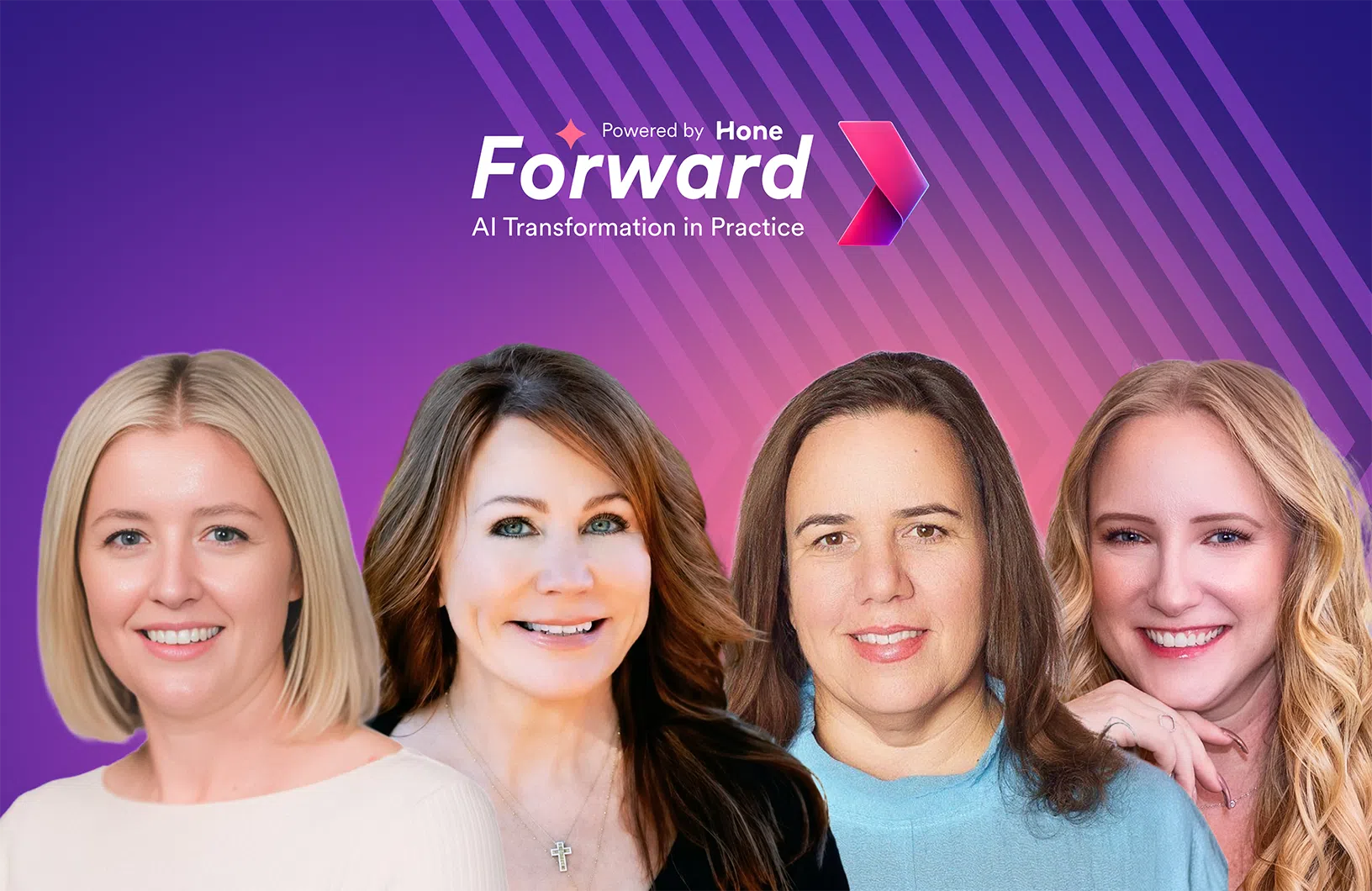
Sophie Hurcombe; Chief People and Operations Officer, Lattice: We have Katey Ross, who is the CHRO at Tacticam. We have Kelly Battelle, who is the Global Chief People Officer at GumGum. And we have KJ Johnson, who is the CHRO at Amplitude. And they have a lot of really great things to share today. But before we jump in, we also want to have you quickly complete a poll. So the poll question we have is how has AI changed the people functions mandate at your organisation?
And then you have the selection of a choice here expanded significantly, maybe it’s expanded somewhat, changed only slightly, hasn’t maybe changed at all.
AI remains primarily outside of your people function, or you’re not sure. And so we just love to hear from you so we can see a sense of where everyone is in that poll, please.
Great. So we’ll keep that up for a second there. But I am gonna quickly pivot us into seeing our faces here and jump into our panel discussion today. Alrighty.
So wonderful panelists here. I do wanna start off with a quick rapid fire question for you all. And the question is, so what’s the biggest thing that AI has added to your plate as a CHRO that wasn’t there two years ago? KJ, you’re first on my screen.
Let’s jump in with you.
KJ Johnson; CHRO, Amplitude: Awesome. Thank you, by the way, for facilitating. This is great. Looking forward to it.
I think if I think over the last eighteen months or two years, what is probably the newest thing for CHROs, it’s the expectation not only to be technically, to be technical, but to be AI fluid, right? Which then means you need to make sure you’re enabling your teams to be AI fluid. So ultimately at the end of the day, it means we’re looking for different skill sets, right? When we’re looking for our HR business partners, our people ops specialists, even our, well, especially probably our comp and total rewards folks, it’s really, really important that we’re checking for how technical they are and their ability to be AI fluid and lean in and build things. So I think that’s probably the been the biggest change that I’ve seen is what a different skill set we’re looking for, not just in our engineers or our technical folks, but also in our within our people team.
Yeah. Absolutely. Kelly, I’d love to hear from you.
Kelly Battelle; Chief People Officer, GumGum: Yeah. I, I mean, we’ll probably all have similar answers here, but I’d say that the number one thing is that, you know, is just taking on the learning curve. When I look back at where I was, you know, starting in twenty twenty six, I was pretty, I was really overwhelmed by AI and the tidal wave that was coming, not just at me, at my team, at the company and feeling behind, right? And so everyone now has this learning curve and the learning curve will be there for a long time, if not forever, because the nature of AI changes and evolves so much more quickly than, you know, other technology in the past. Right?
So you have to make space for your own learning, make space for your team to learn, and then make sure that the company has that space as well. So learning number one.
Couldn’t agree more, Kelly. Katey?
Katey Ross; CHRO, Tacticam: Yeah, I have to echo both of my other panelists here. I think one of the biggest challenges and opportunities is just being more technical and being smarter about how this technology works, how we can deploy it effectively, how we can deploy it safely, how I can bring my team along on that journey, and maintain their excitement and their psychological safety around it. That’s something that we talk about all the time.
I always considered myself a pretty technical person.
But this presents new challenges all the time and ways for me to think about how I can help the organization deploy it well and use it well.
And, you know, putting up those good guardrails in place too, so that our employees are equally as smart about how they’re leveraging it. And when they are using it, that they know exactly what it means and how to exercise good judgment.
So those are the things that come top to mind that I spend the most time thinking about in regards to AI in the workplace and in life.
Sophie: I agree with that, Katey. I have been guilty in the past of saying I’m not technical enough. And then I have like quickly in this like wave of change, found myself saying, like, no. Like, you are technical.
Like, you do have the ability to learn this, and no one has, like, you know, twenty plus years of agentic experience. So, like, why not dive in now and be a part of that change? And so I think it’s such an important piece for us to be mindful that we all are and can be technical as well. Yeah.
I’d love to kick off with a question here, which is, so where are you now expected to lead on AI versus simply supporting the business, which I know has been a big shift for CHROs as well.
And where is that mandate still unclear for you within the business?
KJ, love to start with you.
KJ: Yeah, so I think it’s really clear for me at Amplitude, and I think we have been very, very fortunate here that we are pretty risk tolerant, and we actually shut down the company for an entire week, meaning no one was doing their day jobs. Everyone was expected to spin up AI, build agents, we didn’t care if it worked, we didn’t care if you broke things, right? And so we are all expected to lead in that same way.
And it’s been really exciting for me, and my boss expects all of his direct reports to be demoing agents. So I had to recently get up at our all hands and I had to demo our new performance review AI tool. Right? So we are expected to lead on that. It’s not just the CTO or the chief product officer. It’s everyone is supposed to be demoing and showing their fluency with these tools. So so we’re all expected to lead and model that from the front.
Sophie: I love that, KJ. I love that they’re getting people up to demo that. I think that’s such a powerful way to showcase that across the business as well, and not just from technical leaders, but from, like folks across all the different leadership roles as well. That’s really powerful.
Katey I’d love to hear from you.
Katey: Yeah, so I think the biggest question that I get asked pretty consistently is, am I allowed to do that?
Am I allowed to use this tool? Is this safe?
People dancing around that question of what are they allowed to do and what’s the scope of what they’re allowed to do, which tools they’re allowed to do with.
And so for me, it’s just trying to make sure that the organization is clear on what is available to them, the ways in which we feel it’s safe to leverage that.
And that’s where I can help guide employees because what I find, at least with our team, we’ve got a really great group of people who just want to do great work and do it the right way. And so for me, it’s about making sure that my team and other teams, the question arises, is that they feel that they have the knowledge and that they’re empowered to use it well and use it right.
In terms of the mandate being unclear, you know, I don’t know that it’s unclear for me.
I think my goal is the same and my mandate is the same, as it always has been. It’s to employ, it’s to empower our employees to do the best work of their lives.
And one of the aspects in which they do that is through this technology. And so that’s how I try to partner with our employees and leaders when the topic arises, just to be kind of that same guiding light.
But that requires, again, back to the first question, me staying smart, me staying in partnership with the other senior leaders and understanding what this technology is and what it can do for us.
Sophie: So important. Kelly, I’d love to hear from you.
Kelly: So at our company, AI, both for our solutions for our clients and also our internal adoption and use of it in terms of gaining efficiencies and working smarter and more collaboratively, that is one of our top five priorities. So as, you know, someone on the executive team, I need to champion that within my own, you know, people team and HR function. And then also, you know, anytime I get a chance to talk about it to other people in the company.
And so, while someone hasn’t tapped me and said, need to advance AI company wide, which I know some CHROs are getting, tapped with, you know, I, I am, you know, collaborating with leaders across the organization to ask smart questions about how AI is getting used in their day to day and how that’s changing the way work gets done across teams and within teams.
And then specifically within my own team, making sure everyone has access to the right enterprise tools. I’m very grateful we have access to enterprise AI tools and that everyone’s getting an opportunity to learn how to use those tools in a really smart way and that we’re prioritizing all of the different things that we can do.
You know, that said, I’ll give credit to Daniel Burge, who’s on my team, who reminds me that, you know, AI isn’t something we advance in this really linear way, like maybe projects in the past. We also just have to let people have room to, you cowboy and cowgirl and really just kind of play with it and make mistakes. And so I also champion that too, and try to recognize it when I see, recognize our team members when I see great things. So just remember, like, if you’re out there as a people leader, sometimes your role like, for example, I went to the London office end of last year.
I’m just sitting around the table, you know, having a smart conversation with a group of sales leaders. I just asked, like, how are you guys using AI? I just genuinely wanted to know. But that already that that just brought everything to the consciousness for them around, oh, oh, if Kelly’s asking, maybe I should be thinking about that.
And then they were able to share things with each other that they hadn’t shared before. So it doesn’t have to be a big formal role for you to make a difference in a company and then within your own team as well.
Sophie: That’s so powerful, Kelly. I love that sharing piece and like the failures, the learnings, like so much comes from that. When we don’t stop to actually pause and take learning from that, I think we miss like really important pieces of this and that like nonlinear moment we’re in with AI is like so real. Like, I don’t know if you’re all facing this, I’m sure you all are, but every other day there’s some sort of new advancement and thing that we need to be learning quickly.
And so being really nimble and learning from each other, think is such a big powerful way to do that.
KJ: For sure.
Sophie: I’d love to understand from each of you, how are you working with other functional leaders in the executive team or across your organisation, maybe IT or engineering, to really help drive that transformation across each of your organizations?
Kelly, would you like to start?
Kelly: Yeah. I’ll jump in here. So we’re fortunate to have TJ Albert, who’s a VP of IT security and assurance, who’s really from a project leadership perspective, advancing the way GumGum uses and adopts enterprise AI tools and what we’re learning from each of those tools, because they are expensive and we’ll probably get to that in a minute, but also because we need to be compliant and all of that. So I’m very fortunate that TJ really takes a leadership role in that and also kind of trying her best to track and manage what different teams are doing to use AI across the business, right?
So I have met with TJ a few times and we’re talking now about how to create a learning and development program that’s adaptable as AI changes and also opportunities for people to share best practices across teams, not just within your own team. So obviously I could, you know, create a best practice share tomorrow for my own team. I, you know, probably would be welcome to do that company wide, but it’s better when that’s planned across teams and all of that. And then she reports this to the CFO who, of course, is, you know, cares a lot about costing and modeling and, you know, what’s the ROI and all of that.
So do we from time to time as well. And then, you know, just again, whenever I’m at the, you know, meeting with my peers on the executive team, how are we advancing this initiative, which is one of our priorities internally. So look, AI is a cross functional, you know, thing. I’m look really looking forward to workforce planning conversations this year because they’re gonna be different, in terms of, like, not just talking about, you know, where the org’s headed and, you know, skill gaps and all that, but how is AI changing the work your team gets done?
And, how are you thinking about that in terms of your your head count and work plan for twenty twenty, seven? So I’m looking forward to that cross functional work as well.
Agree. KJ, what about you?
KJ: Yeah, and Kelly, I love what you said about just asking the question to your other leaders, right? Being curious, like, how are you using it? Or what are you doing?
Because I think there are so many learnings from that. People will build skills or tools and then somebody in another function, maybe it’s not exactly right for them, the legal function reports into me at Amplitude, we were sharing some of the skills that we’ve built and the legal function was like, oh, you know what? I think maybe we could tweak same thing. The legal function built something that someone on my team said, oh, we don’t have that same use case, but we could tweak it and make it work.
So, but to your question, Sophie, first I would just wanna say I’m really proud of my team. Without any additional resources or without working with IT specifically. They have built eight or nine prototypes. We have a couple in production now.
Vin Hanra, my team, is my product manager for AI. That’s he specifically every day is supposed to get up and think about how we’re building tools within our team, our people team specifically and for the company, and he and his small but mighty team have built some really amazing things. But when it comes to projects, for instance, we rolled out, we just did our performance management, as I mentioned, tool all in Claude, people didn’t even need to go into Workday for it. The manager review as well, it was all done in Claude.
That did require the collaboration with our amazing IT team, we call it corporate engineering. So we run a COE, we meet monthly to say what’s on our roadmap, what are we building, and then what are some of the projects that are cross functional that we’re going to partner with our IT team for.
Sophie: So helpful. Katey?
Katey: Yeah, I think it looks different. To echo, you know, Kelly, I am excited about conversations around workforce planning, and some of those conversations are already happening very organically with some of our leaders around role transformation, as we look at what AI can do for us. Our employees are right there, too. They know roles are transforming, different opportunities going to arise, and that work is going to look different. So how do we talk about it in a safe way, provide those opportunities for testing, for experimentation, but be very honest about the reality of that role transformation, and not trying to do it in a sweeping way, but do it in a thoughtful way in places where it makes the most sense. So that’s something that I think, we’re going to learn more about as time goes on.
Some of the projects that I’ve been really excited to partner with on are actually through our customer service organization, and working closely with our head of customer.
We have half of our organization who are just the heartbeat of our team. They’re customer service agents.
And, you know, they are, they show up to work every day excited to serve our customers. And, you know, for us performance is paramount, especially with a workforce of, you know, hundreds of agents, and they’re all remote. So working with our head of customer service to think about ways that we can continue to actively communicate to our agents about their performance, how they’re excelling, areas of opportunity.
This workforce is hungry for feedback. And so where we’ve been working together closely is finding ways to leverage AI within their existing workflows to get them that real time daily feedback so that these agents can know how they can grow, how they can continue to excel in their careers, what they can improve on.
And through using AI, we’re now in a place where we can give them that daily feedback. And it’s not just written from an AI, it is human feedback that’s assisted with AI, so that they know they’re getting it from a real person that they can then go and turn to and say, tell me more about that. And we’re seeing a lot of our agents lean into that, which is super exciting.
And where better to do it than with this part of our organization that really matters most to our day to day. And that’s, that’s been really cool to see. And we’re always, we call it big brain time, we sit together in our office, and we think about all the different ways that we can build new tools for them to just help them be successful. It’s been a really cool year for that.
Sophie: That’s really great, Katey. I feel like when I see the customer teams being the focus of this transformation, I often see, like, engineering, product design, etcetera, always, the focus, but I love the focus on the customer organization because to your point, like, there is so much opportunity and space there. And then also, like, how do we continue to get feedback to grow our folks in these teams? We’ve seen the same thing at Lattice, and it’s been really powerful to see our customer facing teams be the first, like, sort of, like, drivers of some of this transformation and change as well. Yeah.
On that note, on a related topic, which I’d love to understand, like, how are you equipping your leaders and employees with the skills needed to navigate an AI enabled workplace? Sounds like Katey, this example with customers is a really good example of that. So I’d love to I’d love to start with you.
Katey: Yeah, I think for me, it’s you know, I really like to get close to leaders at all the holes of the organization.
I really believe in the trickle down economics of great leaders. And so staying really close to those leaders, as an example, working through our head of customer and then working with our customer service leaders, you know, on building these tools, hearing their problems, or hearing their concerns saying, Hey, I want to help our employees, I want to help our teams get better. They just keep asking me for feedback. They just keep asking me what more they can do. But at scale, that’s hard when you’ve got three hundred agents. And so for me, it’s sitting right alongside some of these leaders and showing them, even showing them myself, here’s how I’m leveraging this in my day to day.
If they’re listening, they’re laughing because they know I’ll run out to their desks and be like, have you seen this thing? I think this is going to help you.
And I think just having that really safe culture around just teaching each other and sharing what’s working for us, one, I think is great.
But I see one in the chat too. But with my own team, especially, we sat down at the beginning of the year talking about how we wanted this year to go, what success looked like. And I said, alongside them, I wanted HR, I wanted our department to be at the forefront of what leveraging AI can look like and having great psychological safety around that. It’s providing training, providing tools, talking about it in a very exciting, experimental, safe way and making sure that my team feels comfortable leveraging it. I’ve watched so many members of them just rise to the occasion.
And I think it also starts with, we’re talking about equipping our employees with the skills needed, yourself with the skills needed first.
And that’s been really powerful for me is seeking extra education and professional development, so that I can talk, talk and try to walk the walk the best that I can. And if you can get yourself into a certificate program, if you can get yourself into a training, do it. It can be super transformational, not just for you, but for everyone you come into contact with, because it’ll change the language around it.
Sophie: I think that is such an important call out. Like, I and I think it’s those reminders, like, sometimes we send out, like, these are the sort of programs and courses you could be taking. And like, yes, executive team, we’re talking to you too. Like, you should also take those learnings. You should also find a way to, like, make sure you’re continuing your education.
It’s so powerful. Another thing we’ve also sort of started to drive at Lattice, which has been really helpful is like, what do we actually expect the skills to be in those behaviors? And for us, a big part of our like AI fluency has been around sharing actual competencies that we think span and expand beyond just AI. So, like, the learning culture we talked about earlier, the multiply being able to be a multiplier, all those sorts of things that we feel like span beyond. And, again, those also apply to leaders too. So I think that’s really powerful as well.
All right. I know we have a couple more questions left and so we wanna keep going, but I’d love to start with you on this one, KJ. How are you balancing rising costs, tool costs with a need for broad AI adoption? And what specific measurements and metrics are you tracking to measure that return on your organization’s investment?
KJ: Yeah. That’s the million dollar question. Right? I mean, I think people are referring to it as tokenomics now.
Are we yeah. So it’s the rising inference and utilization costs. So we at Amplitude, we just recently rolled out a framework for token thresholds. Right?
And it’s it’s by role and by function. Obviously, our r and d teams have a higher allotment of token usage versus some of the G and A teams. And then there’s tiers and a process if you need to, if you need more token usage, right? So we’ve just rolled that out, so, you know, jury’s still out, how’s it gonna work?
One thing I have seen that’s been very interesting is the behaviors that it does encourage.
I have to say I was when they said they were gonna roll this out, I was a little concerned because during AI week, when everyone was using everything and anything, it was so exciting.
And to Katey’s point of talking about it in a way that’s exciting and energizing and not this scary thing, everyone kind of got into the flow. And then all of a sudden we were saying, okay, we’re monitoring.
But even for me, it made me think about things like, I could just Google this. I actually don’t need for this, right? Do I need cloth for this? Or can I just Google it? Or, you know, am I going to use Sonnet versus Haiku versus, you know, if you’re not an engineer, you probably don’t need to use Fable ever for anything, right? And so it did get people into the habit of thinking about their spend. So I think that was really good behavior.
In terms of how are we measuring it, I think that’s really going to be, I mean, I would love to hear from Katey and Kelly too, if they’ve nailed this, but I think it’s going to be an art and not a science, especially within the people team. It’s a little more straightforward for engineers, like, okay, how many PRs your token usage, how many PRs did you put out? Right? So that’s a little more straightforward, but for other teams, I mean, we’re not producing PRs, so how do we measure these things?
And we don’t have a perfect sign, you know, we don’t have a perfect algorithm for that yet, right now we’re just monitoring it, But I think for me, what I’ve told my team is we now have these thresholds, we’re not supposed to be exceeding them, or we have to go through, you know, this process if we want to, and what are we putting out for that? Like great, for the performance review cycle, eighty percent of the company used, went through Claude, didn’t even need to go into Workday, used the tool, great. That’s a good measurement versus what our token usage was for that month, but we’re, but it’s gonna be a little more nuanced, I think, and I think it will just iterate over time.
Sophie: Agree, KJ. I think one of those things with the token side of stuff is we’re all learning very quickly. And to your point around the power of knowing your model usage and your spend, so powerful. We’re spending a lot of time investing in people, like, getting that education a little bit closer, because I think if you don’t know, it’s sort of out of sight, out of mind, and so so important. Katey, Kelly, anything that would be helpful to add here?
Kelly: We’re I mean, we’re honestly in the monitor and measure right now as well and looking, you know, yes, there’s token maxes and all of that. Of course, that’s not gonna be scalable as if AI takes over processes on teams and that sort of thing because if the process is now capped by token usage, that’s not gonna be sustainable and scalable for organizations, mine, or anyone else’s. So I think most companies, although it could be maybe another company that’s not on this panel has nailed this, you know, are kind of in that measure and monitor right now and looking at and trying to also assess, did this help the team operate more efficiently? And I think it’s also important to it goes back to learning and development and skill building.
There’s these different modes you can be in an AI, you know, some of them some of you guys have mentioned some of them, depending on what tool you’re in, that could burn more or less tokens, right? Or how many days times a day do you run that process? Maybe you only need to run that process once a day instead of three times a day. And so but if you don’t teach people those skills that, did you know that you’re gonna, you know, get to your max faster your max token usage faster if you do these things, and here’s some ways you could maximize your token usage, then they’re just not gonna know. Right? So this is where learning and developments and spend and measuring efficiencies all comes together. And, you know, we’re doing our best right now.
You see the big headlines around companies rehiring people that they laid off after because they thought AI was going to solve everything. So it’s a delicate balance, I think, we’re all in.
And maybe larger companies are a little further along. We’re more of a mid sized company trying to figure it out.
Super helpful.
Alright. So let’s move on to another question here. I’d love to understand from each of you, how is your team’s priorities changing as a part of this? How is AI driving that?
Kelly: I mean, for me, I I would say oh, so sorry. Go Katey, go ahead.
Katey: Go ahead, Kelly.
Kelly: You know, you know, the way we do work is different now.
You know, after three awesome years at our company, our compensation director moved on, and we haven’t replaced that role yet because we’re able to kind of distribute the comp work and use AI and get the work done. Now we’ll see if that’s sustainable because we haven’t gone through our first annual comp season without a conference. But, but, but so far we’re like, okay, okay. Right.
So it, you know, the way that the work is getting done is getting a little bit more distributed. If you can give people all of the tools and then make sure they’re using those tools in an intelligent way. So I guess that’s one thing. And then also, a lot of the things we, you know, did in a manual way are getting done now through AI processes.
You know, we’re an international company. Every employment change has to come with a letter that used to be someone filling out like a Google form that created a letter. Now that just AI just does that a few times a day and someone looks at it and then it gets sent out. Right?
So, that saved hours and hours and hours and hours of work. Right? And then I would say also using AI to make smarter decisions. We have a new director of talent acquisition, newish, Gary Ganji, who created a very smart talent acquisition dashboard that’s gonna help us, you know, with more predictability in the talent acquisition process in terms of when to open roles, how long a role is gonna take to hire all of those things, where we’re getting candidates from that we just couldn’t get from, like, an ATS before.
Like, it’s just a more intelligent AI driven tool.
KJ: Yeah. I would say for for us, in terms of my team’s priorities, it is all really heavily driven by our COE. So we have our our AI COE within within the people team, and then we have representatives from the comp and bed, from operations, from legal, from all of the different sub functions, and like I said, meet on a regular basis because our priorities have really shifted. Same thing as Kelly, we did the employment verification letters as low hanging fruit, let’s just automate that, right?
But I also wanted the team to differentiate between what are we automating, which is great, and it’s saving us hours and hours of time versus what’s truly agentic, right? And we, and I wanted to draw a line there because
I think you can really quickly get caught up in the automating stuff, which is great, you do want to do that, you want to make it more efficient, but also thinking about the things that are truly game changing across the organization. So we rely heavily on that COE. In fairness, we just put it in place, you know, about four months ago, but we’re relying heavily on that for it to drive our priorities.
And then like Katey and Kelly both mentioned, I’m really looking forward to the upcoming planning cycle, and I’m actually trying to build a dashboard right now in super blocks that we could potentially use to help us with that process as we think about workforce planning, as we think about next year, because those, the roadmap and the priorities of what are you going to build with AI and who do you need to build it, is going to be something relatively new, I think, in terms of how we think about that annual planning this year.
Sophie: Thanks, KJ. Katey, would you like to jump in? I would love the question that we might have missed you for a second there was, how is AI changing your team’s priorities as well?
Katey: I think for us, where we’re at right now is, I don’t know that it’s necessarily changing all of our priorities. I think it’s influencing the work that we know needs to get done.
And so thinking about one of our big priorities is leader enablement and leader learning. So how do we upskill our leaders? How do we enable our leaders within the organization? Those are some big priorities for us.
And so, as a still fairly young team within the organization, but a mighty team, it’s thinking about instead of maybe we would go hire a person to go do XYZ, now it’s, hey, we’ve got this great, awesome group of HR folks on the team, how can we leverage AI to accomplish our goals?
But maybe we don’t need to hire someone, maybe we need to just exercise our own fantastic judgment, exercise our own fantastic knowledge about our company. And maybe we can build tools that meet our leaders where they are, and help enable them in that way. And that’s just one example. It’s, and it’s, we know that they’re going to turn to AI, we know they’re going to turn to the internet, when they have problems, when they need help with something. And, you know, they’re also turning to us. And so ideally, we can marry those two together. And, you know, through our team getting upskilled and super smart in AI, we can meet those leaders where they are and accomplish those priorities.
Sophie: Super helpful. We’re all hanging for our planning sessions. That’s what I’m also hearing here as well.
We do have a question from the audience in our q and a, and so I’ll I’ll I’ll share that one here. Somebody has asked, my organization has brought HR into AI transformation mostly as an afterthought. How can I better advocate for HR’s role and ensure we’re involving we’re involved in shaping the strategy from the start?
Kelly: I think it’s important to push on these conversations. Right? So if you if you if if you have, you know, relationships and partnerships with your peers or or across the company is to talk about what you’re seeing other companies do and that collaboration across HR, finance, legal, engineering, and so on. Right?
And it really is everyone can play a role and everyone should play a role in the AI transformation. So if they’re not seeing HR’s role, you might wanna kind of look at some other company examples and point to those as stories where HR could have a real impact in advancing the company’s goals towards those outcomes?
Or give suggestions too on what you either have a passion for doing, or you think you have a skill set for doing, whether that be an AI learning and development program, whether that just be, you know, helping teams prioritize how they’re going to, you know, advance AI within their team or workforce planning, right?
So don’t always wait for someone to ask you to do it. Look at your existing things that you do with the company and how you can bring AI into those conversations.
Because what you’re doing on a day to day basis, whether it’s AI or not, is advancing the business. So how can you bring AI into those conversations?
And you’ll start to chip away at that.
KJ: Yeah. Plus one to that. And I would also add another angle you might take is what is really, really important to the CEO as an example. We are so engineering centric that I knew anything that touched the engineering organization was going to get his attention.
So we are specifically working hand in hand. We went proactively to them and said, what could we do to help you with your recruiting? What could we do to help make your, you know, talent calibration process better? And how can we use AI to do that?
And then show highlighting that to the CEO, that that got his attention. So, you know, like, what’s kind of who’s the golden child in terms of the function at your organization and proactively partner with them to showcase something that HR is not an afterthought on, I think.
Katey: Yep, couldn’t agree more. I think find those areas where you can naturally add value or problems that you’re naturally being brought in on and then show rather than tell, is kind of my advice, show what you can do, show your expertise, show your ability. And I think it will naturally, the conversation will naturally follow where then it, you don’t have to tell anyone, Hey, include me.
They’re going to want to because you’ve already shown them what you can do. Think that’s the best way to make sure that you’re a part of those important conversations because it is important and there will come a day when they need to bring in HR and you want to be right there and ready for it.
Sophie: So helpful. Thank you, KJ, Kelly and Katey. That was like really good, strong answer. Because I do think people just need to find a way to also yeah, take that action, lean into your talents, lean into your skills. I think that’s really powerful as well.
I know we’re about here at time.
We have one question, but I wanna make sure I’m being mindful. Yeah, Rea, you’re here.
Yeah. No.
Rea: You could take one last question.
Sophie: One last question? Great. Yeah. Wonderful. So we do have one last question. So how are you increasing consumption of AI learning programs across your organizations?
KJ: For us, I would say we, it’s required. You know, it’s a mandate, you have to be doing it. So everyone is supposed to be using AI and it is something that comes into the performance conversations. So everyone understands like, you should, don’t come and ask for more resources or don’t suggest a new process that doesn’t somehow involve something to do with AI.
Sophie: So helpful, KJ.
Yeah. We’re putting it as a requirement into our roles as well. Right?
Like, it’s like there is a learning culture, and it’s a part of what’s expected of you too, is to take the time to learn and and put this into into your routine as well.
Great.
Thank you to our wonderful panelists. Rea Yeah.
Rea: Thank you to our wonderful panelists for sure, the K Powerhouse team over here.
And Sophie, wonderful job moderating. So grateful that you were able to join us and keep the conversation flowing. This was really helpful and insightful to hear straight from CHROs how you’re feeling and what you’re facing. So appreciate all of your perspectives.
Excited for our next session. We’ll just keep on rolling here at Forward! So I’ll see you over at Zach Ward’s session from Modmed.
Really great opportunity to learn another specific case study of an organization and how they have been driving AI fluency and upskilling. I’ll see you over there. Thanks all.
KJ: Thank you everyone.


