












Below is a transcript from the recent session at Forward. Prefer to watch the recording? Click here.
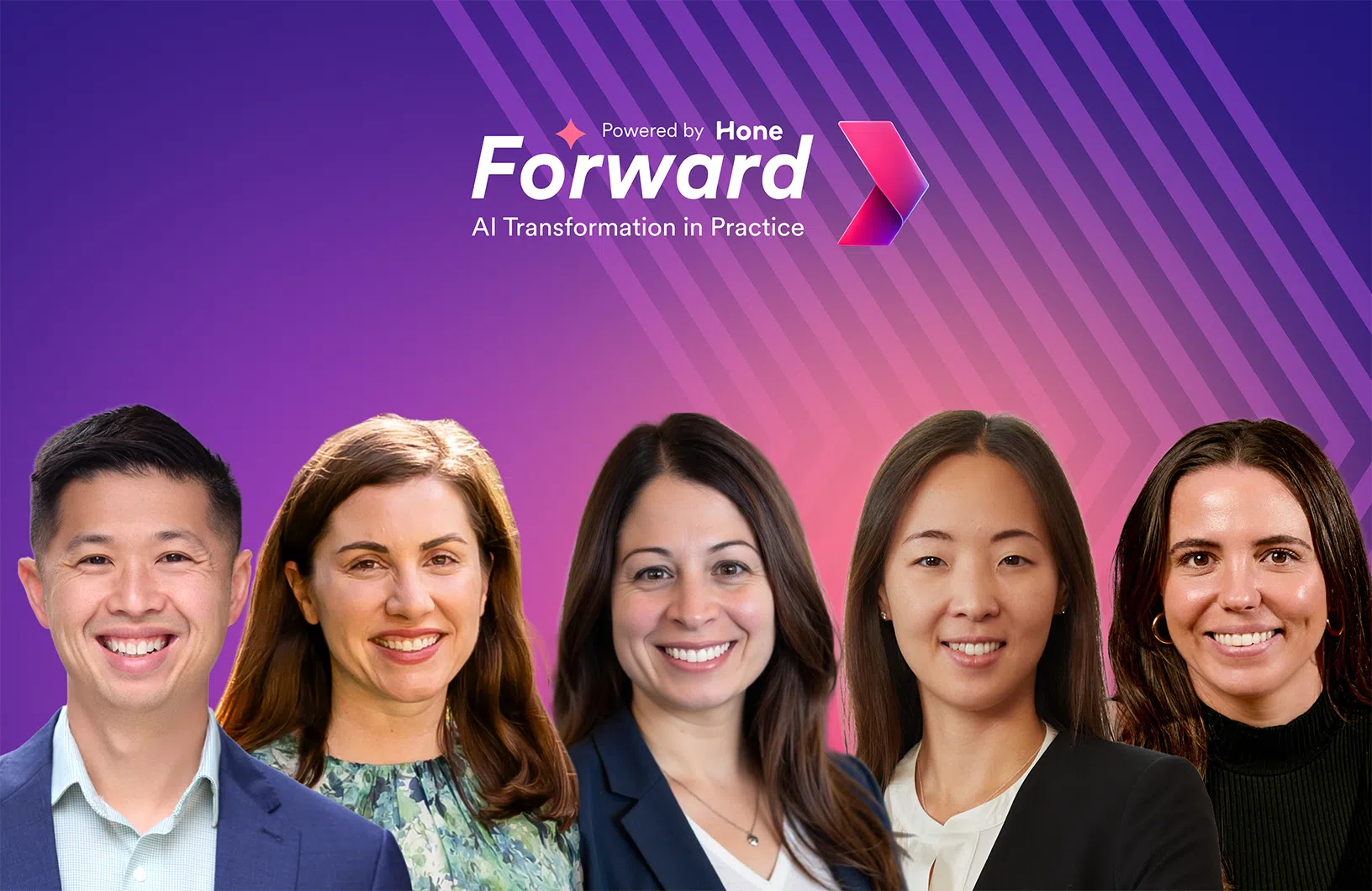
Caelan Kaylegian; Senior Learning Strategist, Hone: Awesome. Well, thank you so much for being here everybody. We are so excited to introduce our first panel discussion of the day.
This session is titled From Early Adoption to Transformation, How to Build AI Ready Organizations. This session is going to be moderated by Al Dea, who I am so excited to have here with us today from the edge of work.
Might be a name that you have seen at other conferences. He really does travel and connect with so many people all over the world. And then this powerhouse group of leaders that I have on the call as well is going to dig into evaluating where your organization actually is on this journey of AI transformation, some of the specific points where folks’ readiness efforts might stall out, and how we can bring our employees along instead of leaving them behind in this journey. So Al, I would love for you to start with some introductions to kick off this conversation.
Al Dea; Founder, The Edge of Work: Wonderful. Thank you so much. It’s so great to be here with you all. My name is Al Dea
I’m the founder of The Edge of Work. As I said in the introduction, I host a podcast called The Edge of Work, and I’m a speaker, advisor, and facilitator, which all that really means is that I talk to a lot of people each and every day. And this shouldn’t be a surprise for anyone here, but one of the biggest topics that comes up so much in my work is around AI transformation. And I’m glad that we have four leaders on this panel who are here today to share some of their perspectives, some of the work they’ve done, and some of the insights they’ve gained, and to hopefully help all of us collectively figure out what’s the next best action that I can take back to my organization for the OAI transformation that I’m leading.
But you don’t wanna hear from me. We wanna hear from the panelists, and so we’re just gonna jump right in. So we’re gonna do really quick introductions because there is so much wisdom here, and I’m just gonna go off of who I see first. And so really quickly, Ariana, would you please just introduce yourself?
Ariana Moon; VP of People Transformation, Greenhouse: Yes. Very excited to be here.
Hi, everyone. I am the VP of people transformation at Greenhouse Software, leading internal AI transformation and strategy.
But I really grew up in talent acquisition and all things workforce planning, talent operations, etcetera. That’s my bread and butter. That’s where my love is. And I’ve had the opportunity there to think about what it means to have an AI powered talent acquisition function. And in my current role, I’m really focused on enterprise wide AI enablement. So it’s been a nice change of scenery, kind of a fun ride, always learning something new every day. And on the personal side, I’m based in Vegas and I’m a very, very proud boy mom.
Al: Wonderful. Megan, I see you next. Would you mind introducing yourself as well?
Megan Beane Torres; VP of Employee Success, Docebo: Sure thing. Hi, everybody. Excited to be here. I’m Megan Beane Torres. I am based in my camper in California. I am the VP of employee success at Docebo.
For those of you who don’t know, Docebo is a learning management software.
And my team is a combination of our HR business partners, our learning and development team that we like to call the talent growth lab, and also our people operations and technology team. I spent my whole career on the talent side of tech at SaaS companies, both big and small, from large public to small startups.
And on this AI journey, our team’s really responsible to help ensure the workforce is ready for it. And we know that we’re using AI intentionally in how people do their jobs and how we evolve work.
Will: Wonderful. Emily, how about you? Mind doing a quick intro?
Emily Haran; HR Evangelist, Rippling: Great. I’m Emily Haran. I am Rippling’s HR evangelist. What a fun title. My background is all in HR, predominantly in tech, being that fun team of one HR person who builds and scales the team, programs, processes to one thousand plus employees.
At Rippling, my focus is really on how AI and HR intersect, so I work internally with our go to market and product teams to help them better understand who HR folks are and how we think about using technologies, and then externally I spend a of time talking to HR folks and really basically studying what they are confronting in their organization as AI is on the scene. And it’s been a really, really fun job and I love getting to share back all of my learnings in forums exactly like this.
Will: Wonderful and Courtney take us home.
Courtney Schneider; Head of Talent Management & Development, GitLab: Yes, hi everyone, Courtney Schneider. I lead the talent management and development team at GitLab and we are a global all remote company, we think the largest all remote company out there in the world And we build AI powered software delivery platform and are trying to also equip our team members to operate in an AI native way. So it’s been a really interesting past six months being at that intersection.
And I love being at that middle point of how are we helping our employees and our business thrive in this moment. So this topic today is especially important and a welcome change. I sent my youngest off to kindergarten this morning. I’ve been a ball of emotions and so I’m excited to about AI today.
Al: Yes, well that’s exactly what we’re gonna do.
I am based in Los Angeles, and I think we’ve got folks from all over here. So if for those of you who are joining us, welcome. If you wanna say hello, feel free to put who you are and where you’re calling in from today just in the chat. We’d love to just see where folks are coming in from.
In the meantime, we’re gonna kick this off because we got a lot to talk about. I guess where I wanna start for this, I heard the word journey a number of times, and I think that’s apropos for what this really feels like. And so I guess my first question, and, Megan, I’m gonna start with you on this. Yep.
It is sort of a little bit of a two parter. But for you and your organization, where would you say you are on your AI transformation journey? And maybe to put some color on this, the second part of this is, what’s a question that you are trying to answer or reflect upon right now?
Megan: Yeah. Those, I mean, those are really meaty questions to kick us off. I’ll I’ll do my best. I’ll so where are we on our journey?
I I’d say Docebo’s really moved pretty deep into the journey now. When we look at AI and the influence on our business, we’re looking through really two primary lenses. One is the business itself and our product, and then the other lens is our people and our work.
So in terms of the product direction, Docebo really leaned into AI early. So we’re a few years into that journey now and really tried to build it in natively into the product itself to really provide this transform transformational tools and solutions that help learning and development leaders be far more effective and operate at scale.
From the employee lens, I’d say we’re about, I’d call it a year and a half, two years into the journey. So certainly not novice. We’ve been leaning in deep.
Every single employee that I can think of that I come across at Docebo is using AI regularly in their day to day.
So we’re not really any longer in that stance of I don’t I don’t know if you all remember this, but when AI was really starting to get hot, the biggest problem we had was employees just trying it. That was a big blocker, the change curve and the change hump of, should I just give it a go? I don’t know. I’m scared of this thing.
It could replace my job. Now for us, we’re well past that. I think that our people have discovered this can be re really valuable to help people speed up and better how do I say you? Work a little faster, but also a little bit more thoroughly to do their day to day while also freeing up their time.
So the big question we have now is now that AI is really helping to supplement more of the routine work, how has that freed up people’s times? And now how can we evolve the work to use those human capabilities as effectively as possible?
That’s where we are deep in the conversation now as well as how do we use AI to help continue to uplevel and upscale. For us, it’s not so much how do we use AI?
How do I say this? How do we up level and up upscale to use AI? I feel like we’re already deep down that path. It’s actually more about what are those human skills and traits and capabilities now that AI is functional that we lean into those skills and optimize them and really help people grow further there to have that appropriate balance.
Al: I like that a lot. I would love to ask the same question to Courtney. Could you maybe share where is GitHub on their AI transformation journey and, you know, what’s a what’s a question you’re thinking about or trying to solve for right now?
Courtney: Yeah. At GitLab, we’re past the experimentation phase. We, know, Megan, so much of what you said was was resonating with me, like the tools are in our employees hands are using on a regular basis. Our data shows us that we have work structure and governance set up, we have multifaceted learning strategy, meeting people where they are, whether it’s on demand or live hands on workshops. We have champion network established.
We have a lot of pieces established and they’re working. So I feel like we’re past that experimentation. We’re more in that scaled experience piece of the like crawl, walk, run. I feel like we’re walk emerging on running.
The piece, the question that I’m currently thinking a lot about with my team is how does the role of the manager evolve in this world?
Like I feel like we’ve spent a lot of time enabling our individual contributors to be hands on.
And I think we have a huge opportunity to put even more focus than we have in our manager community and population in both how can they use it as toolset to help everyone in their team be successful, but also how can they really set the direction and coach and challenge how we transform and do our jobs completely different? Because that middle manager piece, I feel like is gonna make all the difference in getting to that run stage. So I don’t have all the answers there yet, but that is, I feel like the question that we are currently really trying to work through, both talking with our managers, doing external research and thinking through how we set up like a completely new way of talking about the role of the manager and then having that inform our development strategy for the next two years or so. So that’s where we’re at.
Al: I appreciate the focus on the manager. I think so many employees, that that is their direct experience of of the organization that they have every day. And so it’s great that you’re thinking about that. Ariana, I wanna go over to you to maybe share where where’s Greenhouse, on the AI transformation journey? And and, again, what’s that one question that you’re pondering or reflecting on right now?
Ariana: Yeah. I’m like nodding along as I’m listening to Megan and Courtney because kind of a similar state.
And the framing that we use in terms of how we’re making progress at a very high level is our own kind of in house built maturity framework.
There’s a lot of maturity frameworks out there, but we built it specifically to be at the organizational level. So it’s a five stage maturity framework, and we’re kind of like in the middle right now. We’re calling it embedded. And what embedded means to us is that a few things have to come together from the lens of leadership, culture, and tooling. Like those three things in each stage, like have to to come together. And so from a leadership perspective and embedded, you know, you have things like we are now creating clear expectations around AI fluency across our jobs, things that all of us are thinking about here on this call.
From, you know, a culture perspective, you’re thinking about things like, you know, governance, good behaviors. From a tooling perspective, you’re thinking about, you know, essentially provision tools, etcetera, etcetera. So like, we feel really good about having gotten to that state and having moved the needle on leadership, on culture, and on tooling. I think the question we’re trying to answer now is like to get to the next stage, which we’re calling agentic. Like, what does that mean? Like, what are the milestones we need to hit so that at at the point of hitting them, can be like, okay, we feel good about, you know, what leadership needs to look like if you’re an agentic org, what, you know, culture needs to look like if you’re an agentic org and what tooling needs to look like. So for example, at the leadership level, we would expect more kind of hands on involvement around redesigning work for jobs.
A lot of the momentum over the past year was around experiment, try to figure out how to use it. What does smart usage look like? And eventually, want that usage to translate into behavior change. And ultimately, you want that behavior change to trap translate into business impact.
And so as things are changing, like, how are the jobs gonna be redefined? That’s very much the question we’re grappling with.
And on the tooling side, like, you might think, oh, like, we have an agent. We are now AgenTic. We don’t want to make it that easy for us to just, like, check the box. We really want to see agents deployed in secure, scalable ways, not just within, like, our most technical function, but across our non technical functions as well. And we really wanna see good examples of agents removing work end to end, not just making shipping some emails, but really removing work and freeing up human capacity that we can direct that towards higher value work. So kinda everything goes back to this maturity model that we sent set up internally and, getting to AgenSic and being really clear on what that is is the focus and making it, a bar that’s hard to hit.
I think that’s one thing that we wanna be true about.
Al: Wonderful. And I think so much of that too is just the framework you use can be whatever it is, but taking the steps to figure out and define that for your organization, what’s gonna work for you. Last but certainly not least, Emily, same question to round us out for this first question before we move on. Where is Rippling on the AI transformation journey, and what is a question or thought that you’re trying to solve for right now?
Emily: I am in very good company. Rippling is also somewhere between that walk and run stage of AI transformation. Everyone’s using it. We are continuing to create a space for people to experiment with AI, which I think with the excitement when AI first came out, everyone was like, okay, hackathons, all of this fun stuff. We have really been intentional that every single team, not just our technical teams, continues to have that dedicated space to test and play around because AI continues to evolve, so the use cases, what you can build with it, is continuing to evolve.
We live and breathe AI. What we are currently wrestling with, or really maybe my question is, how do we really think about, and it might mirror some of the other questions that we have here, but as roles are evolving, how do we think about making sure we’re looking at it with a long term vision rather than that short term like, oh, could AI replace this? Then we’re good to go. And I really think a lot about how can we make sure we are building a deep talent bench, right? So not getting rid of all entry level roles. How do we make sure that we are building that critical thinking and judgment that we will rely on at every stage of the business, but can’t just kind of appear out of thin air. How do we keep those human experiences that develop that judgment that can, you know, may seem like it’s slowing us down in the interim, but will really set us up for a much more efficient long term growth path.
Al: I appreciate kind of holding that tension between the short and long term. It’s really important, but it’s not always easy to do. For the folks who are joining us here, I wanna offer that question to you. So feel free to put any thoughts in the chat of where either where are you on your AI transformation journey or what’s a question that you’re thinking about right now as we head to the next set of questions for our panelists?
And feel free to just throw that in the chat. I’m sure there will be some great answers. Okay. So, I wanna talk a little bit about change management.
So, let’s just call for what it is. It’s often been said that AI transformation is a change management challenge. It’s a nice broad statement. It’s great to say on a panel like this, but, like, let’s actually unpack that.
Like, let’s actually take that down to the to the studs and really get real about what that means. Emily, I know that I think you had a passion about this question, so I’m gonna turn the mic over to you. When someone says, I think AI is a change management challenge, first off, do you agree? And if you do, I challenge you.
Tell us what what you think that means or or how that you think that shows up either internally rippling or with the customers that you talk to.
Emily: I think most of working on the people side at companies is change management. So I think when new technology comes on the scene, that is just another change management that we have to confront.
When it comes to AI, that change management is changing how we are working. So it’s not like, oh, there’s just this new tool to use. It’s changing the shape of roles. It’s changing, and Courtney and Megan, I think you both kind of touched on managers, It’s changing that like now individual contributors are expected to have some of that management judgment capabilities.
When I think about change management in terms of AI, it’s a much bigger change management than candidly rolling out return to office. This is much more of something that changes on the individual level, the team level, department and org wide level.
I think about what that looks like, it’s really easy to get caught up and think, okay, we’ll change the job description. Good. Okay, we’ll change the job competencies. But like, as soon as you do that, you have to do it again and again, because AI is still changing.
And so what that really looks like is starting to uncover, like, what are the goals that you’re going towards and as a business and how does the work to get there evolve? You’re going to get to those outcomes, but the how you get there is changing and then building the team and the capabilities around that.
And that is a big change. As we all know, you say something once, employees kind of miss it.
So you’ve got to say it over and over again. And that is especially challenging when the change is evolving as well.
Al: Megan, I see you nodding your head a little bit. So I’m assuming you’ve got some thoughts on this. Feel free again to take the floor. Is AI change management challenge? And if so, what does that actually mean? What does that actually look and feel like?
Megan: Al, I’ll take the cop out answer and say AI is an everything challenge.
Definitely it is a change management challenge, but I’m even reading some of the questions coming through and it’s a measurement challenge, it’s a job scope challenge, it’s a recruiting challenge, it’s literally everything under the sun.
So to me, AI itself is transformational.
If we were to all hit pause and zoom out and say, imagine we’re building our businesses from the ground up starting today in an AI world, I think every one of us would say, it’s probably gonna look a little different than how it’s been built to get us to where we are today.
So you hear me talk lot about a skills based organization. And to me, AI has made that speed up. When I say skills based, to me what that means is a far more agile, adaptable business model.
So I know I’m kind of dodging your question here because I think that there’s two steps to it. I think first is, well, what transforms and how and what does it become? I saw some questions on, I don’t even know where to get started and I think that that’s a fair question. I think all of us probably have been in that position of how do you get started? I’ll give you a little hint, just do something.
I found in a lot of, Ariana shared a great framework that I might try to steal from you later Ariana, but I think that a lot of us have gotten started just by beginning to explore and use AI to really understand its capabilities. But the other thing that I would share is to be opinionated. I’ve seen some businesses with AI say, I don’t know what to do, just do AI everything and then we should be good to go. You know I think that’s probably too extreme one way as well that there needs to be a little bit of thought and intention behind it.
So all that to say I think AI first is a transformational challenge and that’s a lot of what Emily was just talking about is rebuilding and then of course with any transformation, of course it becomes a change management challenge because it’s everything from what is the job I have to how do we work to how do I upskill to what’s my new career path to what’s the product I work on. So it’s every type of change that we could hit people with all at once that’s what AI does.
Now I tend to be an eternal optimist that I’m like that’s okay, that’s exciting because guess what, we all get to be in the driver’s seat about how that world evolves.
So I think from a change management lens it’s about bringing some of the what’s in it for me to whoever the person is that we’re working with, whether it’s the business leaders on how defining the business evolve. Courtney, to your point, the managers on how does the role of the manager evolve into the employee, we need to really make sure we’re taking time to always gut check to say, this might evolve the way we operate, but what’s in it for the human being through the lens that they’re sitting in? And to help get into that change curve, you start there. You start with why this is a good thing and be honest and authentic about that, but then really help support and provide the information and the learning and the development to help people along the change journey.
Al: So I want to segue to another question but it’s related to this, but it’s really around this idea of employees, And if you actually look at the definition of transformation in the dictionary, it literally is defined as a complete fundamental and usually permanent change in the form of appearance or character of someone or something.
Now, from what I remember of the basics of, human dynamics and and and human beings, people are open to changing when it’s in the best self interest of what they can see themselves acting into. And so if there ever is a time when someone is resistant to change or isn’t isn’t changing per se, it’s probably because they’ve done the calculus and have thought to themselves, I’m not sure if this is in my best self interest. So I guess the way I’m gonna frame this question is, as we think about the transformation and by the nature of transformation, the change and the working a new way that we are asking our employees to do as a result of AI, how do we do this in a way that actually takes into account employees as human beings and as people?
How do we design change for people and humans that give them reasons to want to change, and again, because it’s in their self interest, versus making it come across as something like an edict or something that is happening to them or through them. Ariana, I’m gonna go to you on this one. Do you have any thoughts on that in terms of how do we keep people at the center of the changes that we’re asking them to make?
Ariana: Yeah. That’s a really rich and complex prompt. I would say folks need to first buy into the story of why this matters. Right? Like, think when we all think about effective change management, like, the story piece is really that necessary ingredient. And what that’s looked like at a high level to start for us at Greenhouse is really kind of like our CEO getting up there and saying like, hey.
This is a moment that we’re having. Like, being real and transparent about it and saying, like, it is it is our job to disrupt ourselves before we are disrupted because we are in a sec we’re in the SaaS industry. We’re going through some pretty massive transformation right now.
And, like, it’s on us. All each of us has a responsibility to take it seriously. So, like, that’s at the very high level. And then you have to have mechanisms that translate that into, well, what does that mean for me, Ariana, as an individual in a very specific role?
And so, you know, I think this kinda goes the thing that I was thinking about as you were as you were asking the question was, like, how we’ve been approaching pushing AI fluency, not just AI adoption. Because, like, usage is great. We have good usage, but it’s not just using for the sake of using. It’s really around, like, what does it mean to be fluent?
And our learnings in doing that has really been you can have these high level definitions, and you can break it down across, like, how leaders need to model it, how managers of managers need to model it, how managers of teams need to model it, and how individuals need to model it. But, like, there is a level of specificity that is further required that is within each department around, okay. Well, if I’m a recruiter coordinator versus an ops person versus versus an HRBP, like, what does that look like for me? And that’s where it has to be a real big partnership between the people team kind of designing that more high level framework and then the department leaders really stepping up and defining, like, what does it look like to use AI well in the job that I’m doing today?
And honestly, that’s really hard because a lot of us have not yet seen. We’re like figuring out in real time, what does that look like? Right? And the thing that the one of the biggest takeaways and experiences that I’ve been having as kind of like a change agent is we a lot of us have been through transformation before, but what feels different to me about this type of transition transformation is that leadership sponsorship often in change management is like a really, really core ingredient.
Like, you gotta have the leaders leading the way. But now because and often they know how to lead the way because they’ve seen like similar types of transformation. But now you’re having the leaders have more questions than answers for this type of transformation because to Megan’s point, it is all encompassing. Like, AI is impacting everything that we do.
And so if you have the leaders themselves kind of like figuring out what is the how do I show up? Like, do I need to be a builder? What does it mean to be a builder? Do I have to, like, come off you know, be the most AI mature or fluent?
My position is, no. You don’t, but you have to know enough to be able to build if you wanted to. Because if you’re gonna ask your team to do it, you need to understand kind of the challenges associated with that. So to me, it ultimately comes back to what is a high level story that you’re telling?
How are you translating that in a very clear way into what does this mean for this specific every specific person in the org? And then how are you also empowering your leaders in this moment of, like, really deep ambiguity and fast paced change to understand what their role is, which is very much a like a evolving conversation.
So I would say like that’s probably the ingredient that’s felt different within this type of transformation, like real time guiding leaders on what good looks like.
Al: I like that. Real time guiding leaders on what good looks like.
As you were talking, one of the things I often think about is that there is a difference between the process of change and the experience of change. A process is something that can be universally shared, but the experience of change is deeply personal and individualized. And that kind of speaks to your point about really getting to the nitty gritty for each individual of, how does this show up for for that person? And, to be clear eyed about it, like, just takes more work.
It’s a lot easier if you just say, here’s the process or here’s the sixty seven rows in the spreadsheet that we need to check through to make sure that we get through the this this part of the change gate. It takes a lot more effort and intention, to bring people along in the journey because that experience is individualized.
And I can’t tell you what that experience is. Like, that’s that’s yours, Ariana, or that’s yours, Emily, or that’s yours, Courtney.
I think the opportunity is on the other side of it in terms of the results that you get. Emily, I think you had some thoughts on this question too, so I want to throw it back to you and just as a reminder, you know, how do we make AI transformation something that employees can participate in and happen through them versus happening to them?
Emily: I really think, and, you know, Ariana, Megan, we’ve we’ve all kind of shared similar thoughts here, but I think, and I I’ve seen this in the chatter, like, creating the space for employees to fail safely and explore with these tools, and transparent communication. Like I think those are, I’ll bucket those into two things. Those are really key. One, we’ve all probably had our own missteps with communication with employees, right?
Even when there’s no information, it’s better to tell employees there’s no update or whatever. Keeps the fear of the unknown spiraling. When it comes to AI, that fear is directly tied to will I have a job? So being upfront with employees of saying, we want you to explore this.
This is the direction the business is going. This is, we don’t know a hundred percent what it’s going to look like in a year’s time, but we know we want you on this journey and telling us how to best use this new technology is like incredibly helpful and starts to take away some of that fear of I might be replaced by AI.
So I think having a really clear and transparent communication with your employees about, hey, this is something we’re testing together, and we need your involvement to better understand where this technology takes, like where it ends up in our org is huge. And then creating the environment, I saw on the chat here, like no one is an immediate genius with AI, right?
And you need to have the space where I talked to a lot of folks who are like, oh, I’m so behind. Haven’t like, I haven’t even opened an LLM. And it’s like, that’s fine. You just have to start and to create to give that permission for folks to start and to do dumb things in their AI tool is the best way to get folks bought in into learning.
And I spoke with someone who, for her team, she was like, oh, I just tell them to break it. Try your best to show how AI doesn’t work. And it’s great because you immediately find out, okay, this tool is not taking my job right now.
But it also shows you, oh, okay, here’s why I shouldn’t rely on this, and my human judgment should stay in the loop, and here’s where it can actually be really, really effective. And so I think really crisp communications, to Ariana’s point, saying you don’t know what you don’t know is one of the best things you can do and building that buy in of like we’re figuring this out together is huge. And then creating that psychological safe space of test around with it, show us what you’ve learned, what you’ve found doesn’t work and share that out because we’re all learning together.
Al: Emily, I think you hit the nail on the head, particularly when we’re talking about the fear of the uncertainty, right? And as human beings, we crave certainty.
The reality of it is, I think for all of you on panel, you all work in techno the technology industry. And so I I would presume part of why you signed up to do this is the excitement of, you know, doing something new and something different. That said, some of that oftentimes cuts against our own human desire to to want to create that certainty, but I love the point you made of, you know, even if you can’t provide full certainty, just acknowledging that. And and because the reality is is if you if you duck and cover on it, people will make up a story in their head, which will probably be less than charitable than whatever one you could have come up with on your own. And so I really appreciate that point. And then I’d spend a lot of time talking about change and leading change, and and I always remember the ABCs. Autonomy, belonging, and contribution.
Finding ways to involve people that give them autonomy in terms of giving them a voice and some agency. Belonging in terms of making them feel like they’re part of something that’s bigger than themselves. And contribution in terms of reminding them they have talents and capabilities that would be valuable to the change that they’re being a part of. And so that is my checklist for this.
Courtney, maybe last question on this. And you can take this one or two ways because it sounds like you have done a lot of experimentation in your organization. So either on this journey, how have you created that safe space to experiment and to try things, to have some things kind of blossom and maybe to have some things maybe not work out as well? Or anything else you want to add just in terms of providing a space for employees to participate in this?
Courtney: Yeah, sure. I think there’s two things that I’ll share that are relevant to that question. One is from an investment in org structure perspective, we created a hub and spoke model. So we have an enterprise AI team that’s centralized, that creates the governance, that does the tooling, that makes those strategic decisions and big bets. And then we have named AI transformation leaders in each of our functions with an engineering team that’s centralized, that can be deployed towards those use cases that get prioritized that we wanna go build. And so that model’s been really helpful, I think, in every employee feeling like they can surface opportunities in the business and that there’s actually something that will happen with those ideas and just creating that contribution, I think, network has been really powerful.
One thing that I’ve been particularly proud of, and I think the organization has learned a ton from is connecting a little bit to the last question is how do you keep our employees at the center of some of this is as a people function, we wanted to find one of the biggest challenges that employees hated, and we wanted to salt use AI to solve that. So we put together a little bit of a tiger team and basically a team, a very lean team of four or five people over the course of six weeks built an in house fully customized talent assessment, mid year check-in experience for our team members and had them like use their feedback, had them do the user acceptance testing and launch it as an MVP and said very clearly, this is not perfect. We built this in six weeks.
Like, we heard like, we are trying to address these pieces of feedback that you have told us about the user experience not working. You’ve told us that it’s daunting to look at a blank screen and try to remember what you did for the past few months. We’ve built AI in, so it’s scraping your Slacks and your documents, and it’s gonna give you ideas to start from to get you over that barrier. And we use that both as an opportunity to say, look what AI can solve that makes your life easier, but also to say like, we’re launching this and it’s not perfect.
And you’re publicly like, there are Slack channels where my team is still answering questions, you know, this one button’s like not working exactly like the right way.
Farther than we ever thought was possible.
Al: Yeah. For sure. Okay. We’ve got three minutes. Time really flies, but I have one question that I need to ask, and it’s gonna go to Ariana. So we’ve made it a few wild without talking about ROI, but we need to talk about ROI and thinking about how do we make sure that we’re getting value out of all this effort and resources that we put into the AI transformation that we’re on. How are you thinking about this or or or where is your thinking about this just in terms of for the effort and the resource that we’re putting in, do we know it’s working or at least trending in the right direction? And, Ariana, I’ll give that to you to to kinda take a crack at.
Ariana: Alright. Let’s try to do this in a minute. I think there are a bunch of components to AI ROI. Right? There’s all the inputs that you have, which are the dollars you throw out AI tools, maybe AI related headcount. There are the investments that you, you know, make towards AI, whether it’s like an AI related project on, you know, on a specific team. Like, those are your inputs.
And then, you know, you see adoption of whatever AI workflow or tool that you deployed, and then you’re seeing behavior change, which ultimately you want to translate into some form of output.
But output is not the end goal. You really want outcomes. Outcomes measured as, like, are you moving the needle on something we, like, truly care about from a business value perspective? Are you helping create dollars?
Are you helping save dollars? Are you helping reduce risk? Are you helping, like, spark innovation? And we really wanna be clear about what those outcomes are because a lot of folks get stuck measuring activity and measuring output.
Like, you know, oh, I made these metrics look better within my recruiting funnel, but, like, for what, like, for what end goal? Right? And so I think the the the the outputs are good early indicators of, like, are the things that you’re, like, investing into or that you have as your inputs actually changing the way that you work? But ultimately, do wanna be really clear on like that end goal or the end outcome that you wanna influence.
So what we stood at Beck Greenhouse is kinda like an AI ROI framework that has a few pieces to it. There’s, you know, a piece that the finance team manages around our spend and, you know, a few other financial related metrics. But then there are aspects that I manage kind of as a hub, but every department leader is responsible for. And that’s really around what we call our AI impact metrics and AI initiatives.
The impact metrics being like the really important things we wanna move the needle on and the AI initiatives being the initiatives that we think are gonna help us move the needle on the thing related to AI. So hopefully, sums it up. I could probably spend an hour talking about this, but that we feel good about this as like a v one because it’s allowing us to be, like, really specific and concrete, and it’s forcing us to be, like, rigorous about the hypotheses that we wanna, like, put forth on how we can move the needle, but we’ll see how it evolves.
Al: Alright. I have so many more questions, and we have zero minutes left. Let’s hear it for our panelists, so virtually clap for them. Thank you so much for sharing such wisdom and expertise.
Panelists, if you have any other thoughts or takeaways, feel free to put them in the chat. And I’m gonna turn this back over to the team behind the show with some closing announcements.
Caelan: Yes. Amazing. Thank you so much to everyone who is on this panel. I was taking notes furiously and just really appreciate the transparency and sharing everything that y’all are doing in your organization.
I think the point that stuck with me the most is, you know, really that this is not a traditional change management challenge and we all are having to approach it in new ways. Change has changed as a result of AI and we all just need to be transparent about how we are working through that, what’s working, what’s not working. So thank you all so much for your contributions. For those of us who are hopping into the next session, we are going to be honing in, pun very much intended, on AI applications for HR specifically.
So we’re going to go beyond the obvious efficiency wins that we might have been using historically and get into how AI shows up more meaningfully across this function.
So hope to see you there. Head on back to the lobby, scroll down, and you’re going to click on practical AI applications in HR. See you over there.
Megan: Thank you.
Caelan: Thanks everybody.


