












Below is a transcript from the recent session at Forward. Prefer to watch the recording? Click here.
Caelan Kaylegian; Senior Learning Strategist, Hone: Hi everybody, I know we are trickling in from our last session so we’re going to give everybody some time to make it into this room if you are just joining us.
This is our final session of the day. If y’all have been here with us since the beginning, you’ve earned five term credits at this point, if that’s something you’re working towards, which is pretty great. If you’ve been popping in and out today, we appreciate all the time that you have been able to give us today. We know it’s a long commitment, but we’re so glad that you’ve been able to be here. And if there’s sessions that you missed that you were hoping to be able to catch up on, all of the sessions are going have been recorded, so you will be able to get some of those things started as well.
Do you know, Jessica, see your question if we can apply for HRCI credits for these, I will get back to our home team and I will get you a response in the chat once we have a minute. So I’m pinning that. And once I disappear, I will work on an answer for that for you, Jessica.
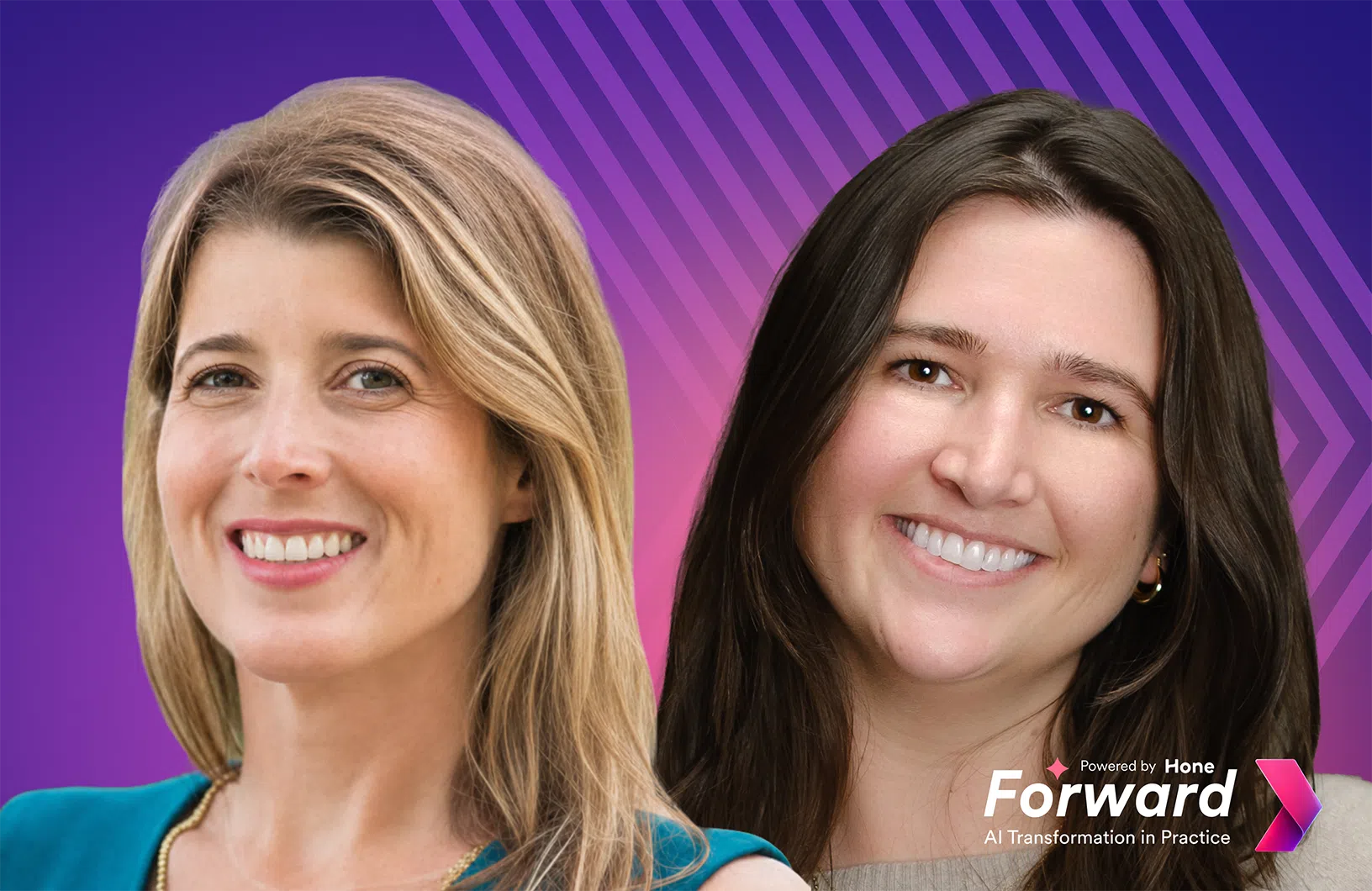
Okay, time is of the essence for these sessions. I always feel like they go by so quickly. So thank you all so much for being here for our final session. This is all focused on building a network of AI champions to drive change from the ground up. I am so pleased to be the one introducing Shana’s story here today. We have worked together, in a home capacity now for a couple of years, and so I’m very excited to bring her to the home stage. She’s the VP of Talent Development and Organizational Effectiveness at Progyny.
Her experience spans healthcare, banking, aviation, consulting, and professional services And she’s especially passionate about mobilizing networks of change champions. Perfect to be speaking to this today. And joining her is Carlin Sheridan, Director of AI Enablement and Adoption at Progyny, where she’s leading enterprise efforts to to translate AI strategy into scalable ways of working. She brings together both change management and operational execution to help teens confidently integrate AI into their day to day work. So today, these two are walking us through how Progyny identified and mobilized AI champions across their organization. It’s a really cool use case and how they built a culture around AI that is low risk, high safety, and centered on people. So Shana, Carlin, I would love to turn it over to you.
Shana Storey, VP of Talent Development & Organizational Effectiveness, Progyny: Awesome, thank you so much for that wonderful introduction, Caelan. It’s been great working with you over the last few years, so it was nice to have you as our intro. And thank you, I want to say thank you to Carlin who’s helped, not only put this presentation together, but is like my co conspirator day in and day out and so we are often locked at the hip amongst another five or six others of us driving change and transformation here at Progyny. So thank you again Carlin for being part of the presentation today and sharing your insights and wisdom.
So to kind of ground ourselves, it’s really important to kind of think about the general way we approach change.
We can’t really approach change without thinking about how does this play out within the context of people, how do people feel. At the end of the day, I’m very much a people person mixed with a systems person. So as we really wanted to think this through, we wanted to make sure we had a lot of care for every level of the organization, from the employee who’s likely to be impacted by automation if they’re not already impacted by automation, to the leaders who are starting to think about how are they going to manage multiple agents on top of their team to what work and future of work might look like. And so we really started to layer out our change program with a number of considerations. We did work with an external partner on some of our initial thinking, which helped us shape a roadmap in the beginning, but that has certainly evolved over the last three to six months without them continuing on with our work here.
And so we started with a framework thinking around our layered learning paths.
You can’t have change unless you support change with resources and layered learning paths were certainly a core piece of that.
And the second piece we really thought about is how do we deal with applied practice? You can’t just do learning in your own little silo and then expect to see a result in the team. And so we’ve layered in different things like practice sessions, either through office hours or live connects or workshops, either run by technology team members or run by people who are starting to do more adoption within their localized team and business users. But we’re also layering something really cool around mentorship and reverse mentorship with the AI skilling.
Although I’m not here to talk about that right now, it’s near and dear to my heart because we’re about to launch our first cohort in a couple weeks. And so I’ve been really, most of my day to day has actually been thinking about the reverse mentorship piece. Always happy to talk to anybody about mentorship after this, so feel free to connect with me or Carlin on LinkedIn. We’re happy to talk through this as well.
And really the piece where change came into play and where we’ve spent a number of our efforts is local enablement. So we’ve approached change at Progyny from like a top down perspective.
Obviously, leaders want us to embrace new tools and think about the future of work and think about what work might look like six months from now or two years from now, but really change happens from the ground up. If you think about large change movements in like the world, it is often a tidal wave of people coming together to drive something different.
But local enablement really is a place we’ve structured a lot of our work and a lot of our considerations and thinking through how who are the right people for this piece became a big part of our earlier work in Q1.
Then we’ve been working from a leadership team or transformation team around continuous reinforcement and then without monthly evaluation, we are definitely approaching this as like an agile workflow. There’s a lot of iteration, there’s a lot of try, lot of reiterate, get data, reconfigure. And so we run kind of a monthly evaluation approach on what’s working and not working and we shut down the things that don’t stick and we amp up or try new things that do feel sticky.
Kind of just a general sentiment, if you have questions along the way feel free to drop them into chat. I’m happy to try and keep up with them. Same with Carlin. I’ll try and integrate.
If you do have a question, I’ll try and integrate an answer right into into my monologue here. But I’d love to make sure you are getting what you need out of our conversation today, so do feel free to ask along the way. But to kind of ground ourselves a little bit further is I wanted to give you a practical framework. If you’re thinking about change or you’re new in the adoption space of AI or any kind of tooling that is going live within your company, is this is the way we have approached our governance as well as how we’ve organized our methodology around learning and interventions.
And so governance is actually a huge thing, especially in AI. There’s so many more safety risks. We work in a HIPAA compliant company. We are healthcare space.
Safety, InfoSec is always top of mind is actually a very big piece of how we build our guardrails. And so we have InfoSec team members as part of our transformation team, helping us build these guardrails, helping us build the right escalation pathways, making sure we started out with compliance training. So if you wanted a AI tool, you needed to complete your compliance training around AI safety.
I’ve never seen people complete compliance training so quickly. It was the least amount of reminders I’ve ever had to send.
Then there’s a strong approval process for anything that is outside of our core tooling if we’re looking to add on. And then we’ve defined a number of moments, communication being a moment, shared resources, again the escalation pathways. These are moments in time that people need to be able to have access to and find a resource.
And then really structuring our learning approach around reinforcement, using our learning leads, those folks who do more of the education moments, whether they sit in a formal learning development or HR space, or they sit within the business. We have a number of folks who are on our tech team who have taken on like a bit of a mantle to help educate non technical colleagues. That’s been a really cool piece of the development here.
Our change leads, the way we’ve organized our champion group, and Karlyn will break this down a little bit more, is we have people who are leads of other champions. That has allowed us to have more of a cascaded network of information where champions are supported by leads. Leads are the ones that connect into the transformation team and provide feedback and and help with the guardrails. We’re enabling our manager and leader population as well as, like, risk and government moments. And these are all met in ways we reinforce.
Practice is really important. I wanted to list out all the different things we’re doing in the space of practice, learning, making sure there’s broad access, role based fluency. So what I need to know from an AI perspective and AI use case is not the same thing as my technical colleagues might need to know. And so we wanted to make sure we’re bringing on different things like home for our managers, using and leveraging the AI tools and education moments, but also bringing on the right in-depth technical training that can parse out and be role based.
And then also learning within the team and then enroll. People don’t do it unless they can Don’t learn it unless they can actively use it in their team. So really a lot of enabling safe sharing of GPTs. We’ve built a number of GPTs that individuals can share with one another personally, like within a team.
But we’ve also built as a company a number of GPTs that are being used to help with personalized project dashboards all the way to from an l and d perspective, our intake form is now in a GPT that we’re about to launch, which allows our partners and stakeholders in the business to have a better formalized thought around what the training needs to be or what the problem definition is so we feel less like an order taker and more like a strategic partner. And then, a big huge piece of is this recognition and celebration. So many of these people are volunteering their time or thinking about, like, if you use the Google model, that twenty percent time should be invested in innovation and driving business forward.
So many people are are leaning in on that twenty percent or even greater, on top of still delivering on their day jobs. So celebrating and finding ways to recognize those colleagues who are stepping up either through different education moments, access to other things, or celebrating them at our town halls. So I wanted to give you a framework in case you’re struggling to get started. This is something you could take and plug and play right into your own world.
And with that, I think I’m about to hand this off to Carlin.
Carlin Sheridan; Director, AI Enablement & Adoption, Progyny: Perfect. Well, I’d also like to reiterate a huge thank you to Shaina, who has definitely been along for this ride with me as we’ve been trying to help the org through this change management journey. I think I’ve gotten to see firsthand how much we benefit from being an organization that already had in place a strong culture of learning and a resource driven culture. When we looked at what the champion framework would look like at Progyny, one of the things that stood out to me most is that we really wanted to emphasize peer to peer support and peer to peer learning.
There’s a lot happening in the space of AI. We are all, like, constantly overwhelmed with messaging, with information, with resources. And so we wanted to give people a place they could go that was a peer who they already knew and worked with, who they knew knew their function and knew their struggles and knew the challenges they may be facing, and who is a trusted resource who could help us reinforce messaging on the ground. So those champions are working locally within their own domain in order to help us make sure that we’re removing barriers, escalating risks or questions where appropriate, and as Shana mentioned, getting executive insight into what is actually happening as we begin this rollout of these AI tools and the feedback loops that are starting to exist within the organization.
What that looks like in practice is that we released a survey during which we collected nominations. And so people nominated their peers, their teammates, their managers, who they saw as having a particularly insightful or valuable interest in AI. Once we had that finalized list, we worked with leadership to narrow it down further. And then each function received their own change lead who was leading a pod of a group of champions.
For some functions in our organization that may be smaller or leaner, we actually combined them based on business area or things that we saw similar within their working patterns or skill sets. But all of those champions were really united by the fact that they are people who had a strong local influence skill, which to me looked like they were people who their peers would trust. For those change leads and champions, we first kicked off with training where Shana and Shelley were able to help guide them through facilitation. A lot of these change leads had previously been individual contributors, and so hadn’t necessarily been in this role before where they were gonna be facilitating office hours, taking in feedback from their peers.
And so that baseline training and alignment on what it looked like to facilitate and how to be successful in doing so, I think was incredibly important to the ultimate success of this initiative. For that core experience, we have a cohort model. So as we have medical leaves, other business requirements come up, we can rotate people up and tap in backups as needed, but we try to continue with the same as much as possible so that we can continue to mentor and coach and develop those skill sets over time. The group right now has monthly connections.
They will have quarterly ongoing skill sessions, and they also get individualized time with leadership where they’re given a chance to spotlight what their portion of the organization is doing and focused on. And then those senior leaders who maybe have not had a chance to connect with these individuals previously also get a chance to deliver feedback to them and help refine how they want their function or business segment to approach rolling out AI. Things that we are looking to track, and this is a constantly evolving list, but some of the quick ones off the bat were office hour attendance, questions, themes, risks, blockers, general sentiment throughout these office hours.
So if there was something that was coming up consistently or there was a group that was consistently negative around AI adoption, we wanted to know about that so that we could start partnering with leadership to focus on a change management strategy to address what may be happening underneath that fear.
We also, on an ongoing basis, have received feedback from our most engaged change leads and champions to make sure that we’ve been adjusting the program and tailoring it to their needs.
So overall, I think what this framework has done is it allowed us to I keep saying we almost stuck a meat thermometer into our organization and got to understand how people really felt about AI adoption and where it would have its strongest use cases at the ground level all across our business in a pretty effective way considering the size and the scope of the population we were dealing with.
So I have been very excited about this framework.
And as I mentioned, so appreciative of the work that Shane and team had done to set us up to be the type of organization where I think this would be particularly successful.
Shana: I think from like an HR perspective and succession planning and row mobility component, a few things I wanted to call out about the Change Network is this gives an opportunity for people who want to explore a possible different career path, especially those ICs who are very early in their career. We’re seeing along with upskilling in AI, we’re seeing a huge upskill in Python, an upskill in data analytics and data insights, and even early data science skills in a population that hadn’t had a chance to learn those skills in college.
The second piece is many of those folks who wanted to be part of this change program, many of them are not technical people. So as Carlin mentioned, it’s really about that influence, a pure influence within their space. So we have folks who are certainly, they would say they are the least technical person on our team, but they have so much influence. They have such a positive attitude and they’re so willing to lean in that they the recipe for a great change champion.
And so we went beyond the traditional definition of a change champion of someone being an expert in the space and looked for the people who are most willing and most excited to work differently or try something new.
And that is worked in great ways in some ways. I’m seeing people in marketing building out these crazy project dashboards and iterating in different tooling like you would with Codex or Claude or something where they’re actually building like Vibe coding solutions and getting support from tech. And it’s such a cool thing to see somebody who’s non technical build these skills. You get this moment of like that college vibe around the office, which is such a great bringer of energy to people.
And second it’s a lot of people who wanted to build leadership skills so maybe they would like to move towards a management perspective and this is an opportunity for them to kind of really start to get a flavor of what it’s like to coordinate other people and drive change and have clear messaging and follow through. And so there’s a lot of times, Carlin and I or another woman, Shelly on our team are actually coaching folks around leadership skills. So they get this other opportunity for development and mentorship built in this program that allows them to get leadership skills without necessarily taking on a formal leadership role.
And I know we’re pretty much about halfway point So Karlyn and I could almost talk about this for forever because we we’re very excited about this. So, again, if you have questions along the way, please drop them in. But, Karlyn, I know this is your slide too.
Carlin: Yeah. So when we looked at, as I mentioned, the success metrics and what we wanted to understand about how this program was shifting our organization, the greatest benefits we’re looking for overall is that we first had to start with a solid foundation of knowledge that would enable us to start realizing true operational savings and revenue uplift through workflow integration, but we’re it’s gonna take us some time to get there. We first have to have people understand the tools, understand how to utilize the tools, what they’re looking for, what makes a good prompt or a good codex functionality.
And then from there, we’re able to start to look at workflows that we think are good fits or good use cases to continue to delve into. From that base, we are able also able to work on our leadership and organizational capabilities and our alignment visibility and risk management. What both of those boil down to, in my mind, is a really strong communication network where we have our champions who are peers on the ground. We have our leaders, and they are reinforcing the same message throughout our organization at all times to make sure people understand that what we are doing with our AI rollout is intended to be people first and upskill first, and is really something that I think of as an investment the organization is making in me and all of our teams to ensure that we’re ready for this future way of working that is coming in some capacity to shift and change the ways all of us perform our jobs today. Yeah.
And I think one thing that’s been really cool is we’ve invited a lot of play into this space.
Shana: And so it’s not always hard outcomes that show up. It’s often, let’s try this together. For example, I didn’t know I had never used building a skill before and I sat down in front of my whole department and said, let’s learn this together and set up a learning session and tried something out and we just worked through prompting to prompt be able to prompt us and coach ourselves in developing something and since then the team has actually stood up their own approach to on a weekly basis. They go in and do some vibe coding or work on a project together and they try stuff out. But we also encourage people to play in ChatGPT or whatever tool we’re using if it’s play for the month.
The kind of thought is if you approach it from play, it becomes less scary.
So we’ve done everything from your color analysis workshops to let’s build a little tiny character avatar that sits on your desktop to let’s do some hard work like how could we build out a SOP review reviewer GPT and so we’re really trying to like think about play but also work which has allowed people who are not normally technical to find a very low barrier of entry.
Carlin: I know we don’t have a ton of time and I am We do have a question in the chat, so I’m just going to jump in to read it out.
Shana: Yeah, absolutely.
Carlin: Caitlin asked if these sorry, sorry. I tried to pronounce her last name at first. Caitlin asked she said she’s curious about the size of our teams, additional hours per week the change champions have in our work.
She mentioned she works at a very lean organization that is stretched and trying to think of how to implement something similar that fits the org, and also that she’s enjoying learning about your approach.
Shana: Yeah. So, for example, my L and D team is four, including myself. So I certainly know firsthand that, what a lean team looks like, and many of our teams at Progyny are very, very lean. And this is a piece where we’ve had leaders make the commitment. This is where leadership sponsorship is so important, is leaders make the commitment for our change champions and change leads to have space to engage in this program and drive change.
We’ve also had other leaders embed space within their workflow.
So we’ll see an entire department where the c suite has said, every Friday, everybody’s taking two hours to scale. And at the end of it, we’re gonna debrief what people learned. And the teams that are making that dedicated space or that dedicated time are defining an outcome as part of it. It’s not just here’s you have time, go do things, and we expect you to skill in that space.
It is let’s talk about what you have learned during that time. The mid med mid level managers are actually asking, like, where people are spending their time learning, what the word are they completing. We don’t necessarily see an outcome change in, like, learning completion status, but what we do see is an outcome in the department driving different types of solutions or rethinking the way they were working even without necessarily AI tooling and automation. And so that C suite and that senior leadership group has really started to help create space and every department has committed that this population will have the time to dedicate, but many departments are committing to every team having time to upskill.
It’s a little bit harder with operational groups, so we don’t see as much of that drive in an ops space where you have hourly employees, but there is a large commitment is there as well that is trickling in AI education. And I’m actually seeing surprisingly folks who are hourly and we don’t ask them to do this, but you do see those who are driven to develop themselves engaging after hours or using their commute time to skill. And it’s not something we’ve asked them to do. In fact, I’d rather them not do it, I’d rather them be able to find the space at work, but it’s exciting to see folks lead in there.
There’s a couple things we wanted to share from, like, a framework perspective, and this is this slide’s been up for a minute.
Clarity for me in the way we operate is it’s gotta be simple and it’s gotta have a rhythm. And so every month, we have the same cadence. It’s actually about a six week cadence that happens. So we’re starting the next cycle while this cycle is still closing out, but, we align every month, with our executive team about what’s working and not working.
We equip, we build out like guidance and tools for all of our change leads. We’ve started to consolidate some of the training initiatives. So initially, like every month, every team was running basics except our tech teams. They were running more of their own programming, but all of our business user teams were running the same sets of change led training sessions, like basics, like the color analysis, simple prompting, how to get to a better prompt, how to get to a cleaner outcome faster.
And now what we’ve done is we’re far enough into the program where we’re consolidating the basics hours to accommodate those users who haven’t yet gotten involved. So are probably, I hate calling the laggards group, those who aren’t yet playing, pulling them into a more foundational session that’s coming driven out of the Progyny University team while the teams are starting to craft and design their own working sessions on a monthly office hours. We send out different modules, we send out different comms, leaders are reinforcing in off sites or team meetings, and then we reset every month. We get feedback from our change leads and change champions. They report in. We’re we’re tracking attendance, like how many people but not who. Because we want people to feel naturally engaged and, like, make sure it doesn’t feel punitive if they’re not coming, But we are looking at metrics that like percentage of department that are engaged in some of these like change run sessions.
And we we communicate regularly. We have a week. We have an open chat and people ask questions all the time. We start to have to have two chats where technical questions have to go somewhere else, and our core change team is able to best focus on more of the broader employee base.
And then this coordinated action is really, really important. So the sponsor team, our exec team really thinks about setting the direction. We advise on what we’re seeing in the business on what’s working and not working, but they help us define that objective, and they help communicate that message across our senior leadership team.
Our core team, which are folks like Carlin and I, but also we mentioned those from InfoSec, our engineering team, folks who are, information architects, folks from products, we come together three times a week. Initially we were running like an agile project, but we still meet three times a week to talk about the issues coming up and work through barriers and iterate on our programs and build additional processes. Then we’re really invested in activating locally. Those are our change champions. We give them as much as we can to equip them. And then for our employees, it’s really about apply and approve.
Some other things that I think Caelan will probably share out some of the materials that we’ve created from a framework perspective, but really these are the responses, the situation and response. When we say we adjust regularly, this has become like a full time effort on a number of people to adjust constantly.
If it’s working, we keep working it. If it’s not working, we think about doing something else. So we’ve started to make sure we’re giving multiple different pathways for business users. We’re finding people are at all different stages.
We’re segmenting out practice, we’re using workflow sessions. So cross functionally, we’re starting to build a network of people who are doing similar work, even if they’re not doing the exact same work, who are trying to solve similar problems.
So we’re consolidating efforts and so if somebody finds something that’s working, we’re able to share it. And then really we continually try and equip our champions in our localization with really strong materials to support their population.
I think it’s worth saying as we wrap up this part is this is our first Change Champion program here at Progyny. We have not used a Change Champion program. We’re in a small company and we’re getting too big to be able to do things organically. And so this is the first time we’ve formalized a program like this.
And so we are still feeling through with what works and doesn’t work. I’ve been in change leadership roles at other orgs and I’ve advised on change in a consulting space, but we’re trying things a little bit different. Like I mentioned, we don’t want the most technically savvy people. I want people on the ground who are saying, hey look, I can do this too, which lowers the barrier for those who are intimidated.
So we’ve spent a lot of time being thoughtful about what change could look like and what change champions need to be to make it successful here. It’s been a really fun experiment because ultimately what we’re doing is we’re experimenting, trying, and doing something new. We’re at our close. I hope if you did have a question, you did answer it in chat, but if somebody does have a question, probably have time to just do that last one.
Caelan: Awesome. I’m keeping an eye on the chat here.
Give people a minute if they need anything, but I do wanna say thank you both so much for walking through this. It was so concrete and so actionable, really, truly, like, the road map that people might be looking for to Activate Change Champions. So thank you both so so much for rounding out a really amazing day with such a strong story to tell here. So thank you both so so much.
Shana: Thank you so much for having us.
Caelan: Yes, absolutely. And for everybody who is still on the line with us, Rhea and I, wanted to jump back in together to send you off properly, but this is the wrap on all of our sessions for the day. That’s a wrap.
Rea Rotholz; VP, Solution, Hone: It’s a wrap.
I just really want to say that.
Caelan: Quickly.
We want to say thank you to every single speaker who joined us today. We had a really amazing lineup and it has been so incredible to learn from each of them and alongside each of them today. I loved hearing how many speakers were in each other’s sessions. That was really encouraging and amazing. And thank you to all of you attendees for being here with us. We know you have a lot of demands on your time and so we don’t take you being here lightly at all.
Rea: And for those of you who could stick around for five more minutes, we would love to hear in the chat, what is a takeaway?
What’s something that is sticking with you as you go back to work for the rest of the day if you’re on the West Coast or if you’re closing down for the day if you’re on the East Coast or if you’re asleep if you’re on the other side of the world? But what’s like one takeaway that is standing out to you? And we’d love to just hear from each other. And while you’re putting in the chat, we have a few of our own from the HOME team that we would love to share. So I’ll start.
One of the main takeaways from today is adoption tells you the tech that is being used, but capability tells you if it’s actually working. We heard from Serena, training people to use a tool is not the same as building capability.
Caelan: Yep, absolutely. And I love what Tina just put in about keeping things human. I think another trend was we need to name what is human before we hand off what isn’t. And it’s possible we’ve already kind of gone down this road assigning things to AI and if that’s the case then we need to go back and audit and say are the right things being delegated to AI at this point. And so Joel talked a little bit about how we should never outsource judgment, right? So he had his sing framework and that was the N, if anybody loves an acronym, and there’s a consequence of like you own an output and you’re responsible for their output, and so making sure that that is the human in the equation in the loop, even if we’ve delegated something to AI.
Rea: Yep, absolutely.
Caelan: Another key takeaway, anyone in the chat?
I like Lisa’s, don’t be afraid to use the tool. That’s a good one, right? Like people are learning by just jumping in head first. And one of the things we said in the beginning of today is we also have to learn from each other because the pace is honestly too fast to even just learn on our own.
So that’s a good one. Lisa, don’t be afraid to jump in.
Caelan: Yeah, amazing. I think also on our end, like so many topics and panels and discussions talked about how the role of the manager has really shifted.
I think specifically Jamie in a session that I led with the panel talked about what’s becoming obsolete is this manager is the sole gatekeeper of information, right? We have to go away from this idea that like leaders know everything, right, and they’re because of their seniority, they have all the information, we’ve really kind of distributed that across the organization and have different personas that we can activate, right? Our AI builders, flight directors, which is coming from Raya and Tom’s session, but I think really goes to show that the expertise is moving across the organization and we have to be ready for managers to be able to manage that effectively.
Rea: A hundred percent and I’ll close this off with something that we started with. I feel like it’s full circle, but Will Fang from Phamphletics said it as well, which is AI transformation is not just about technology, it’s leadership transformation. It’s the people. And we in HR really have a unique place in the organization to support our people and really drive change through people. So anyway, thanks Will. We agree with you.
With that, I do want to remind everyone of our little takeaway that we shared a couple times. So I’m going to share my screen, that QR code that we have for you all.
We would love to share more about Hone in general and our live instructor led trainings, how we support both leadership development and AI transformation. But specifically, we have built an awesome tool that you can try for free, no obligation.
And that’s our AI fluency needs assessment. So it’s an awesome opportunity to understand where you are in your AI fluency journey. You can also share it with a few team members if you’d like, and you can talk about your results and understand where you are. So definitely, if you have your phone, get your QR code here. You can also message us, and we would love to hear from you.
So I will leave that up there.
Caelan: Yeah. With that, thank you all again so much for spending your day with us here at Forward. Wishing you all a great rest of your day, night, whatever time of the day it is, and I hope you have a great rest of your week.
Rea: It’s been awesome. Thank you all.
Caelan: Thanks, everybody.


